We've all seen the digital image format JPEG (Joint Photographic Experts Group). It's a standard on the web because these images can be compressed, which creates smaller file sizes and easier sharing. The compression happens in two forms that serve as a useful analogy for explanations.
Baseline Compression - This form of compression works in full resolution, line-by-line. The image is complete when every line is present.
Progressive Compression takes a different approach. It starts blurry and develops into full resolution.
The Lesson for Explainers
We all have the Curse of Knowledge. When we know a subject well, it interferes with our ability to make accurate assumptions about the knowledge of others. What seems normal and simple for us can be confusing for learners.
When we understand an idea fully, it appears to us in high resolution. We learned the basics long ago and now see the details, technicalities, and exceptions. When it's our turn to teach someone, we must adjust our thinking and consider what will work for our audience. The two types of image compression above are a way to approach this situation and counteract the curse.
Baseline Explanations
When your audience is informed and generally matches your level of knowledge, you can think about using a baseline explanation. Here the idea is presented piece-by-piece in full resolution. You assume the big idea is clear and your explanation is more linear, from beginning to end. This could be an explanation of a process, flow of information, or a financial model.
Progressive Explanations
When your audience is new to an idea, they will need to see the big picture. Here, the idea is low resolution at first. Only the big ideas are visible. Details are not apparent or discussed, yet. The process builds from blurry shapes to recognizable forms, and eventually to full resolution. This approach works well for introductions to new concepts, or when context is useful.
Your Next Explanation
The next time you need to explain an idea, think about the curse of knowledge, JPEGs, and what approach will work best for your audience. Do they need to see the big blurry idea first, or can you dive into the details?
My new book, Big Enough, arrives on September 15th and I can't wait to share it.
Big Enough tells the Common Craft story over a decade, with a focus on the experiments and decisions that helped us create a thriving two-person business that doesn't require an HR department. The book is for anyone interested in saner, healthier approaches to building a business that supports their values.
Pre-order the Book
Big Enough is available for pre-order in both ebook and paperback, using the links below. I hope you'll consider pre-ordering because you'll be the first to receive it and pre-orders help the book earn attention when it launches. The 90-second video below will make it clear.
Note: You can also pre-order from the book's home page and I'll send you free stickers and maybe Big Enough socks. :)
Explainer: Why Pre-Orders Help to Authors
From the Back Cover:
An eye-opening antidote to the endless-growth mindset, Big Enough offers an alternative path to career success
In this illuminating book, entrepreneur Lee LeFever gives an inside view of building a scalable, product-focused business—while never compromising on quality of life. Lee and his wife, Sachi, responded to the promise of the internet by building a home-based business, Common Craft, that was profitable yet small enough to pivot and innovate.
Lee takes you through the multiple business models they pursued—marketplace, digital product licensing, subscription services, distribution partnerships, and more—and offers his best tips for how you, too, can build a lightweight business that supports a life you love.
A must-read for anyone interested in entrepreneurship, business strategy, and e-commerce, Big Enough arms you with insights into how technology and innovation are changing the face of business—and how the science of happiness and the pursuit of values can help redefine what it means to be successful.
"A refreshing, personal guide to designing a business around the values that matter most to you. I found a lot to steal here, and I think you will, too."
—Austin Kleon, New York Times–bestselling author of Steal Like An Artist
"A practical business autobiography, approachable and useful."
—Seth Godin, founder of Akimbo.com
"If you are an entrepreneur with heart, you’ll love this book."
When I was a kid, there was only one real way to watch shows on TV and that was network television. With rabbit ears and a little magic, the shows were beamed into our TV in full color. At the time, commercial interruptions were just part of the experience.
As I grew older, my parents invested in a cable TV connection and this was an exciting part of my young life. I could suddenly access MTV and The Comedy Channel, again with commercials. But cable also provided for a different kind of channel that cost a little extra and, refreshingly, had no commercials. The experience of HBO let me imagine that TV could be different and it felt like the TV I wanted to watch.
Then, not too long ago, online platforms like Netflix provided yet another version of what TV could be. For a monthly fee, Netflix provided always-on access to commercial free shows and movies and the freedom to watch anything on the platform at any time. Again, a fundamentally different experience than network TV.
Today, I rarely watch network TV. I’d rather avoid commercial interruptions and I usually find the shows don’t appeal to me nearly as much. It’s as if the commercials themselves cause the shows to be less interesting. Could that be the case? We can answer this question by considering who the customers truly are for network TV.
I think about it like this: the shows that appear on network TV are the ones that can attract the largest audiences. The more people tune in, the more money can be made from commercials. This creates a kind of filter for new shows. To make it to network TV, the show must be able to build an audience and importantly, sell advertising. The customer, from the perspective of the networks, is the advertisers and not the viewers. The advertisers pay the bills and govern what makes it to my TV.
Now, let’s compare that to Netflix and HBO, which come with a monthly fee from viewers. They both provide a wide variety of programming that could never make it to network TV. While there are a number of reasons why this is the case, perhaps the biggest is not having to sell advertising. They are user supported services and reflect what their users want to see.
Common Craft, on a much smaller scale, uses the same model. Our videos are not what the YouTube audience is demanding today. Explanations of plagiarism or the public domain will not garner the millions of views it takes to earn a living on YouTube advertising. But here’s the thing… we believe these videos and others like them should be available because they educate and solve problems. They help teachers and trainers and librarians. They are useful.
That’s why we are a user supported service. Yes, we have membership fees, and those fees mean we can provide a fundamentally different kind of service to educators. Our videos don’t have advertising or even logos. There are no interruptions or product placements. In fact, many of our titles come from member suggestions. The people and organizations who choose to support our work are our focus and biggest influence on the videos we produce and that’s exactly where we want to be.
What if completing your goals felt more like a game, with points, competition and awards? That’s the goal of gamification - to motivate and engage people by making the completion of tasks feel like a game that you want to win.
What it Teaches
Gamification is becoming a bigger part of our lives and for good reason: it works. This video explains the concept of gamification and how game mechanics are used to motivate people to accomplish personal and professional tasks and goals. It teaches:
Why data and measurements are not enough to motivate people
Why products, services and organizations are using gamification
How an internal team uses gamification to complete a project
Why gamification is becoming a part of everyday life
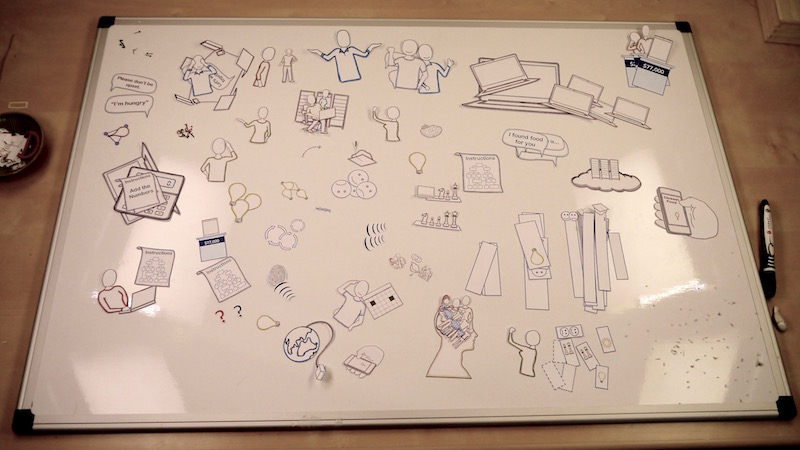
Back in 2007, Sachi and I had an idea. YouTube was just getting started and we wanted to make videos that explained technology. After a few failed attempts, Sachi suggested pointing a video camera at a whiteboard and recording human hands moving paper cut-outs and markers on the screen. This was the birth of Common Craft videos and our first video was RSS in Plain English, what many consider the first explainer video of the YouTube era.
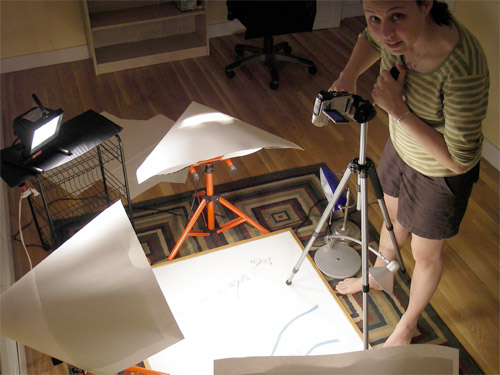
Sachi in 2007 with out 1st generation whiteboard setup
Since then, a lot has changed, but the basic format of Common Craft videos has remained the same. The 80+ “ready made” videos we license to educators all use live-action, stop-motion animation with paper cut-outs. For each video, we print, cut-out and animate every piece of paper that appears.
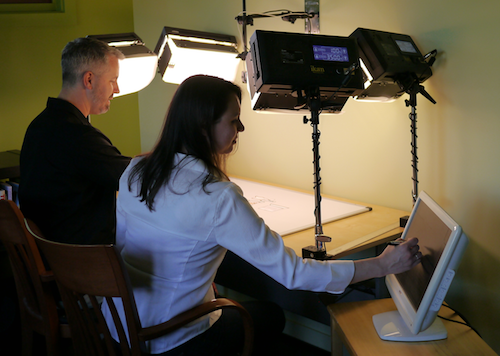
We film the video over 3-4 hours and then Sachi edits it all together with a voice-over. It’s all very time-consuming.
And now, we’ve made a decision to adjust our method. Common Craft is going digital. Let me explain...
Finding a Better Way
We love our work and there are two big things we love to do:
Produce explainer videos that help educators
Create resources (Cut-outs, Explainer Academy) that help professionals become better explainers
In reviewing our time and priorities, we saw that the video production method we’ve used since 2007 is complex and involves extensive time, equipment (lights, camera, software) and know-how. Unlike so many other parts of our work, the process had not evolved to be more efficient.
At the same time, we have grown even more focused on helping others learn to explain ideas and create DIY animated videos. We could see that teaching our live-action, stop-motion process would be a challenge.
An Idea Was Born
We started asking ourselves what really mattered and what could change after nearly ten years. We considered questions like:
What if we experimented and developed a new, more streamlined method for making Common Craft videos?
What if the method we develop is focused on simple, inexpensive, DIY tools (like presentation and screencasting software) that almost anyone can use?
In the end, we gathered feedback and agreed that our work as explainers is grounded in our process for writing and refining scripts, and developing visual stories.
While stop-motion animation and on-screen hand gestures served us well, they were not required for creating the same compelling explanations that our fans and members love to use.
So, we started experimenting and developed a simpler production method over the last year that’s all digital. In fact, this method was what we used to create the 60+ videos in the Explainer Academy and is the exact same method we teach in the DIY Media Maker Course. It's known as "Common Craft Style".
Looking Ahead
Starting immediately, future videos for the Common Craft Video Library will be created in digital format. We’ll be developing the same scripts, storyboards, visuals and voice-overs as before, but the visuals will be animated with software instead of edited video footage.
With this new efficiency, we're excited to create more videos and hopefully continue to inspire others to become explainer video creators.
John Lee Dumas and I had a really fun (and hopefully interesting) conversation for his podcast Entrepreneur on Fire. If you're interested in how I think about the business side of what we do, I think you'll enjoy it.