Free is the Future

By leelefever on February 26, 2008 - 1:11pm.

9 comments

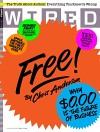
Chris Anderson, the author of The Long Tail and editor-in-chief of Wired Magazine,  has moved his focus to "Free".  His article is the cover story of the latest Wired (Free! Why $0.00 Is the Future of Business) and has a book coming out in 2009. I think he's onto something.

A couple of quotes:

Once a marketing gimmick, free has emerged as a full-fledged economy. Offering free music proved successful for Radiohead, Trent Reznor of Nine Inch Nails, and a swarm of other bands on MySpace that grasped the audience-building merits of zero.
Technology is giving companies greater flexibility in how broadly they can define their markets, allowing them more freedom to give away products or services to one set of customers while selling to another set.

I encourage you to read the article - I think it's a meme that will be around for a while. For now though, I want to talk a bit about how "Free" has impacted Common Craft...

Being a small company, we need to keep costs down, and the free economy has been a huge help.

Bandwidth: We pay zero bandwidth costs to serve our videos online.  The bandwidth is paid for by the hosts, namely Blip.tv and YouTube (though we are "pro" members of blip).  These costs could be considerable for a small shop like us.

Web hosting: Our web site is essentially free to us thanks to the fine folks at RainCity Studios.  It's a sponsor/partner arrangement that's good for both of us. 

Marketing: We spend little, if anything on traditional marketing. The good people of the web have been better marketers than we could have imagined.  Plus, blog posts are always free. The marketing cost comes in terms of our time.

Communication/Collaboration:  We're heavy users of Google's free business services, like Google Docs, Gmail, etc. (collectively known as Google Apps.) And of course, there's the Twitters, Facebooks, LinkedIns, etc. 

At the same time, we've oriented our business around freeness.

Let's pretend that we started making videos like RSS in Plain English with the purpose of making money from them directly, perhaps by charging for access. Here's what wouldn't have happened:

  • We wouldn't have put the videos on You Tube, Blip.tv, etc.
  • The videos would have never been spread across the Web via bloggers.
  • We would not have a popular blog or videos with lots of views.
  • There would not be demand for our custom services
  • We would not have worked for Google, H&R Block, Redfin, etc.
  • We wouldn't have a recognizable brand.
  • We would not be so happy right now

Sure, we may have made some money in the short term, but we'd also be toiling in obscurity for a lot longer. Here is what this has taught us:

Make something useful, brand it, and give it away for free. Encourage others to share it and make it easy for them to do so. 

Look for markets that will be happy to pay for a custom or specialized version of the free item.  Make sure your free products appeal to these markets.   

Be open and friendly. Talk to people who ask about sharing your free items. What do they want?  What do they need?  What would help them?  Look for opportunities to build paying models around these needs. 

Look for tiers of freeness.  Consider creating free versions and pay versions, with the pay versions offering higher quality, ease of use, special access, etc. 

Look for ways to collaborate with other organizations for free.  Trade time, brand, information or whatever makes a win-win for the parties involved. 

The bottom line is that there is approximately zero possibility that Common Craft could have been successful without the free economy. I'm with Chris, the future of business is free.

Free Contnet

I want to thank you for putting into simple words, again, a really simple idea! My son, who is now 23, has been saying to me for years, (as I lament over the adults that I know who lack understanding of economic changes going on), that the good people get it and so I shouldn't worry!

We all have to rethink who owns creative content. Teachers who blast kids for plagiarism are the first ones who copy and paste ideas from other teachers and want to know how to use copyright images in their powerpoints. They simply need to be asking the kids better questions if they don't want them to copy and paste.

Thanks again for sharing! You are great and I love using your videos. I will totally support your sponsors!

Free Training & Education

A few months ago I began researching free training & education. Having worked as a contract training developer for many years, I can distinguish good training from bad. To be honest, I didn't expect to find many good, free items, since I know that it takes time and effort (and time is money) to develop training. But I hoped my efforts would unearth a few items to share on my blog that would help people who can't afford (or simply wouldn't risk spending money on) learning something new.

Much to my surprise, I have discovered an almost unlimited number of great items that are not only well-crafted from an instructional design perpective, but go deeply and thoroughly into all sorts of subjects. From academic courses provided by open universities such as Yale and MIT to highly specific skill-building training provided by commercial companies, free is unquestionably the future for training and education.

To see for yourself, check out these examples of great freebies:
* Many hours of basic IT (newbie computer user) training:
http://alison.com/courses/ICDL-ECDL+2003
* Hours and hours of patient Algebra tutoring:
http://www.xyalgebra.org/
* Basic painting & drawing (beautifully illustrated):
http://www.geocities.com/~jlhagan/lessons/mainmenu.htm
* BBC Real Chinese: Intro to Mandarin
http://www.bbc.co.uk/languages/chinese/real_chinese/
* Accounting Coaching & Training:
http://www.accountingcoach.com/
* Anything from Open Yale (full semester courses!):
http://open.yale.edu/courses/index.htm

And, of course, my growing list of great training freebies includes such highly-efficient, cut-to-the-chase, instant classics as your RSS in Plain English, etc.

The bottom line: There's a lot more going on here than simply saving money. We are on our way to making most of human knowledge freely available to anyone with a computer connection. This is hugely transformative! And it has the potential to truly democratize the planet by driving out ignorance and empowering everyone who seeks wisdom.

very cool case study

Hi Lee,

I saw the same post on Chris Anderson's The Long Tail blog a few days back with a quite different context. There the Comments had spiraled into a very heated exchange on the merits/evils of free, drawing examples of celebrity names like Sheryl Crow and Oprah Winfrey. Still a very valuable conversation to watch, but one that's quite different than yours.

However I found your spin on the issue very interesting... to see first-hand how it's impacted and benefited your own business in such a positive and profound way.

Blogging, social networking, The Long Tail, and FREE clearly are changing the way the World gets information.

No longer are giants like NBC, News Corp, CNN, etc. acting as the de facto gate keepers.

Thanks for the great post and fascinating look into the inner workings of Common Craft and how FREE has helped your company grow.

Best,

Joshua Feinberg

the long tail is strong

I've been tracking Chris Anderson's The Long Tail site for a couple months now and agree he is definitely on to something.
IMO, it is easier for privately held companies to do a give-away in the short term for long-term benefit. Not that larger companies can't do it. The classic business case example is the tools required for shaving: Shick will give away the razor and charge for the replacement blades.
The Long Tail concept is a meaningful extension of the razor company approach.

Is Free really the solution?

I think that "free" is sometimes overrated. There will always be a market for people who simplify things and can teach well. So what if there's a ton of free info online? I love it, but what about the people who don't have time to find it? Things may be free but time is not. Just as people will pay to go to college to learn things they could learn on their own, people will pay for good information, especially if it saves them time/effort.

I didn't mean for this to sound negative towards the free idea. There are ways it can work, and I'm glad it's worked out for your company. But I think there are still opportunities to do good work and charge for it. Sure, free can be used to attract people, but at the end of the day, you still have to put food on the table.

Making a Living on Free

I've been making a living on free content since about November 2000. A large part of that comes from recommending free solutions to common computer problems. And while that's awesome, if it weren't for people's willingness to buy stuff (aka the stuff advertised next to my free content) I wouldn't be able to make a living at providing a free service.

It's also worth noting that while I recommend free services and software that solve problems for most people, I largely use software and services that cost money for the same things - why? because there's generally something about the pay products that saves me time over using the free solution (and I frequently point out that many free things involve a time tradeoff).

There's a respectable balance that must be maintained between the ability to provide many things at very low cost and/or free vs. charging money for things and making a living doing something you're passionate about. Even some of the examples cited by Chris, like music that's essentially free online, are merely a gateway drug to getting people to buy (very expensive) concert tickets. I could give a lot a way for free at 10,000 people a night for $75/person over 200 nights a year.

If you ask the people who were hosting videos on VideoEgg how they feel about having free taken away, there's yet another perspective on free. It turns out that for VideoEgg, making money with a free product was hard (maybe impossible) and it became necessary for them to turn off the free faucet. You could argue that choosing VideoEgg was the wrong solution, but in a sea of a million video hosts who all offer comparable service at the same price, it's hard to know who will be around in 1, 5, or 100 years.

So free can be excellent, but it's not without risk

"Free" isn't new, and it certainly isn't an economy

Before I go negative, let me just say that I love the "free" commoncraft stuff I've seen on Youtube. It is clever, catchy, content rich, simple.

Y'all are good enough that you can actually sell (*gasp) your services to people who want you to do for their project what you've done at your own expense for other projects. The only reason those people can afford to pay you, is that they aren't giving everything away.

Broadcast television is "free" but only to the viewers, because advertisers pay for all of the considerable production costs so that their products can be associated with the shows. Products that they don't give away. Internet "broadcasting" is no different. It isn't free. Free is not an economy, it's a tease to the real economy.

If "free" (vaguely defined) really is how to do business, it is because of the ability of advertising to generate income -- and not the psychic kind. It's not new, any more than the idea of "free" gift wrapping (of the products that you paid for) was new, back when it used to be common.

As Milton Friedman so often reminded us, there's no such thing as a free lunch.

Chris Anderson Is A Genius!

For some reason a lot of people in my business industry are not getting this..that will in my opinion be the downfall of the current real estate business model.

Free Power

I wonder if someday we'll live in a world where power is close to free.... where each house could have a super-efficient solar panel, wind turbine, reactor, or whatever. power we don't burn. something renewable. it's nice to dream.

http://vocalnation.net

Post new comment

The content of this field is kept private and will not be shown publicly.
The Common Craft name and logo are trademarks of Common Craft, LLC. © 2007
All blog posts and Common Craft Show videos are Creative Commons Licensed