 This is the second in a series of posts about being lightweight. Our first was focused on working with clients and this installment is all about tools we use.
Tools, or the the wrong tools, become a risk when they create unnecessary drag in every day work. Often, we've found ourselves wondering if we're using a sledgehammer to drive a nail. If so, we look for alternatives.
In being lightweight, we also consider mental and emotional baggage that goes along with tools. We're often willing to pay for peace of mind and look for tools that remove anxiety. Anxiety is very heavy for us and we always want to reduce it.
Here are some of the tools, services and ideas that we use to be lightweight. Your mileage may vary.
Web Site - We're fans of content management platforms like Drupal, Wordpress, etc. We only know basic html, so when we're working with designers on a new Common Craft site, we make easy, lightweight management a big priority. I've wasted too many hours trying to write code. Technology often stands in the way of what I want to share on the web - and that's a shame.
Hosted Services - We're not technical people. Maintaining our own
server sounds like hell to us. So, we use hosting services for
everything we do. Our web site, our videos, our photos are all on
servers that are maintained by others. Choose them well, let the specialists do their
jobs and get out of the way.
Documents - Google Docs has had a huge impact on our workflow. We do a lot of editing together and there simply isn't a better way to work on the same document at the same time. Attachments are too heavy.
Video Sharing - Often we need to share a 50mb video file with a client. We could send a CD, we could FTP it. Instead, we use hosts like Vimeo.com that have good privacy options. This makes life easier on us and the client - all they need to share the video with co-workers is to share the link and password. Plus, they can watch the video in Flash and choose to download it it too.
Social Networking - We have presence on the major social networks, but they aren't a part of our day-to-day work. We have serious questions about the time it takes to really make the networks work, especially Facebook. It seems too heavy for me to have to use multiple inboxes across the networks. We love Twitter because it's lightweight - it's a direct line to part of our community that doesn't require clicking a link in email.
Bookkeeping - When I started Common Craft in 2003, I bought Quickbooks because I thought was what you're supposed to do. It was a way, way too much for me. Even today, we are more than happy using spreadsheets to track our books (Sachi is a spreadsheet ninja). For many small businesses, Quickbooks (and similar programs) are often a heavy, cumbersome way to deal with the books. Do you need all that?
Home Network - We have all our computers, printers and music system hooked together wirelessly. We used to have to take a laptop to the printer in another room to print. We used to have to get up to change the music. It's a small thing, but a nice home network (run by Apple's Airport Extreme and Express) makes life a bit nicer.
Home Environment - We spend a lot of time at home. Because we're here so much, we've agreed that we will invest in making home like we want it - comfortable and easy. Home should not feel heavy or cause anxiety. If you can't make home like you want it, what can you do?
Back Ups - Like most, we are horrible about remembering to back up our files. The thing is, we shouldn't have to remember - this is stress that has a cure. We use Mozy that keeps everything backed up automatically. Peace of mind is lightweight.
Selling Digital Downloads - We have been very impressed with e-junkie as a means for selling digital downloads. You upload a file and e-junkie provides an "add to cart" button that works on almost any web page and a flash-based shopping cart. It's a perfect solution for The Common Craft Store - e-junkie handles everything and provides the right tools for managing customers.
Mowing the Lawn - Yes, it's true. We recently purchased a rechargeable electric mower called a Neuton. We've gone through a dirty, loud mower every couple of years and those things are a PAIN. Our new mower is perfect - it starts immediately, mows for an hour on a charge, is clean and so quite you can hear the blades being chopped.

Reading - I'll write more about this later, but I recently bought a Kindle - Amazon's e-reader. It's poorly designed in some ways, but it makes books and especially newspapers feel heavy, cumbersome and wasteful. I am a big fan.
Future - I'm currently lobbying Sachi to get a scooter. I think we can get rid of one of our vehicles and replace it with a scooter over time. Scooters are lightweight in so many ways - gas, parking, convenience.
So, this concludes the tools part of the series. I hope that you will look at the tools you use every day and think about the alternatives - and don't forget about anxiety - what could be the heaviest thing of all.
Next Up - Being Lightweight: Business Design
 Not everyone knows, but Common Craft is a two-person, home-based business. We're 100% independent, with zero employees or investors. While we work with specialists by contract, everything that Common Craft does comes from us and impacts only us. This has been our goal since 2006 when Sachi and I started working together and today, we're starting to really understand what it means to be a two person "couple company."

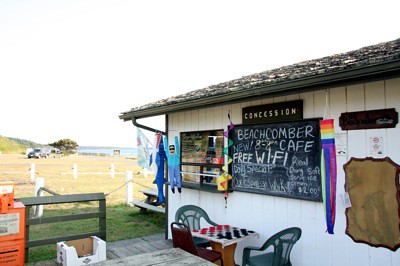 Free wifi out here in the far reaches of the country. Cool! We walked in and talked a bit.